Issue 20: The Impossible Ideology of Equity
The unhelpful virtue

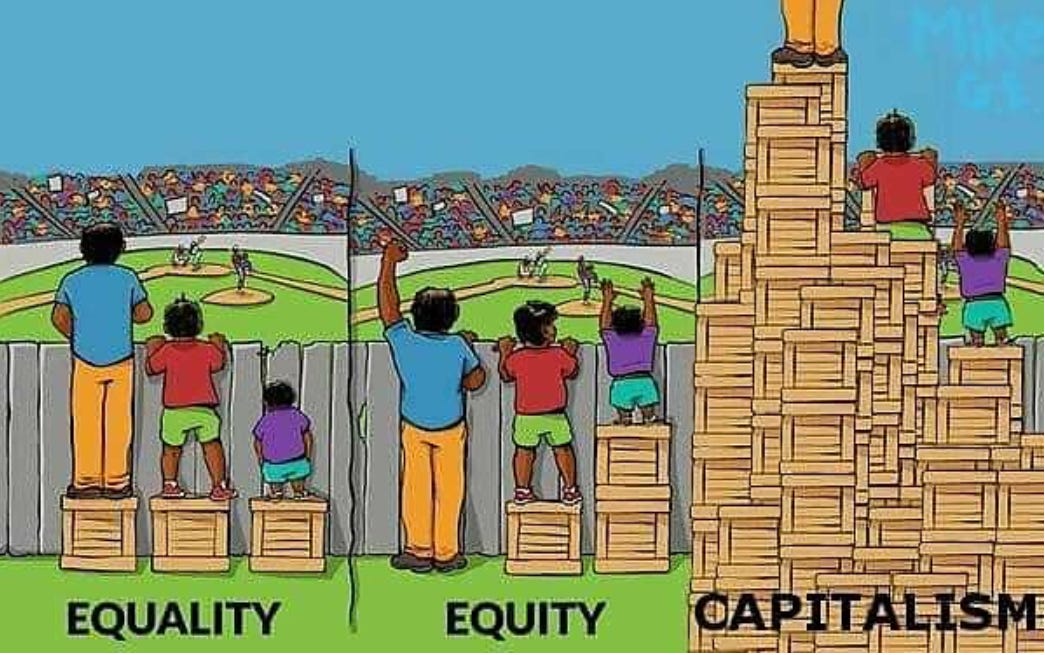
In his book Enlightenment Now1, Steven Pinker retells an old joke about two Soviet men. The two friends—Igor and Boris—lived very similar lives, both finding it hard to survive off the produce of their small plots of land. The only noticeable difference between the two mens’ sets of possessions was that Boris owned an old scrawny goat. One day a fairy appeared to Igor and said she would grant him one wish. Igor thought about it then replied, “I wish that Boris’s goat would die.” The irony being that despite the two men being more equal after the goat died, neither was better off.
We live in curious times where Igor’s way of thinking is the norm. It even has a name, and that name is equity. However, equity is mostly a false hope that offers little to those who are said to benefit from it the most.
In theory, equity is about recognising that some people have disadvantages in life and making allowances for these is important. In other words, we must ensure that everyone has equal opportunities. In reality, it is the various disparities in outcomes between groups that are cited when justifying the ongoing push for equity. This makes the fight against inequity synonymous with a quest to have equality of outcomes.
One feature of equity goals is that individual members of groups are inferred to be the same as everyone else in that large group, simply because they share one commonality such as race or gender. The idea that people within large homogenous groups have uniform experiences and traits is patiently not in line with reality. Human beings differ along a multitude of dimensions.
To cover their illogical thinking, proponents of equity rarely discuss what their ethic looks like in anything but abstract ways. They locate their solutions within a grand vision that exists in an imaginary world with no examples of places where their theory has any real embodiment.
The nebulous nature of equity is not the only issue with this malformed ideal. Equity is far from compatible with a central pillar of progress—freedom. Aleksandr Solzhenitsyn, after observing the pain of communism in Soviet Russia, said, “Human beings are born with different capacities. If they are free they are not equal. If they are equal, they are not free.” The resulting differences in life outcomes among people who freely chose different educational pathways, professions, investments, and pastimes are inevitable and understandable, not necessarily a sign of injustice. Yet the equity narrative provides no other explanation for the differences between groups other than that all success is the result of oppression.
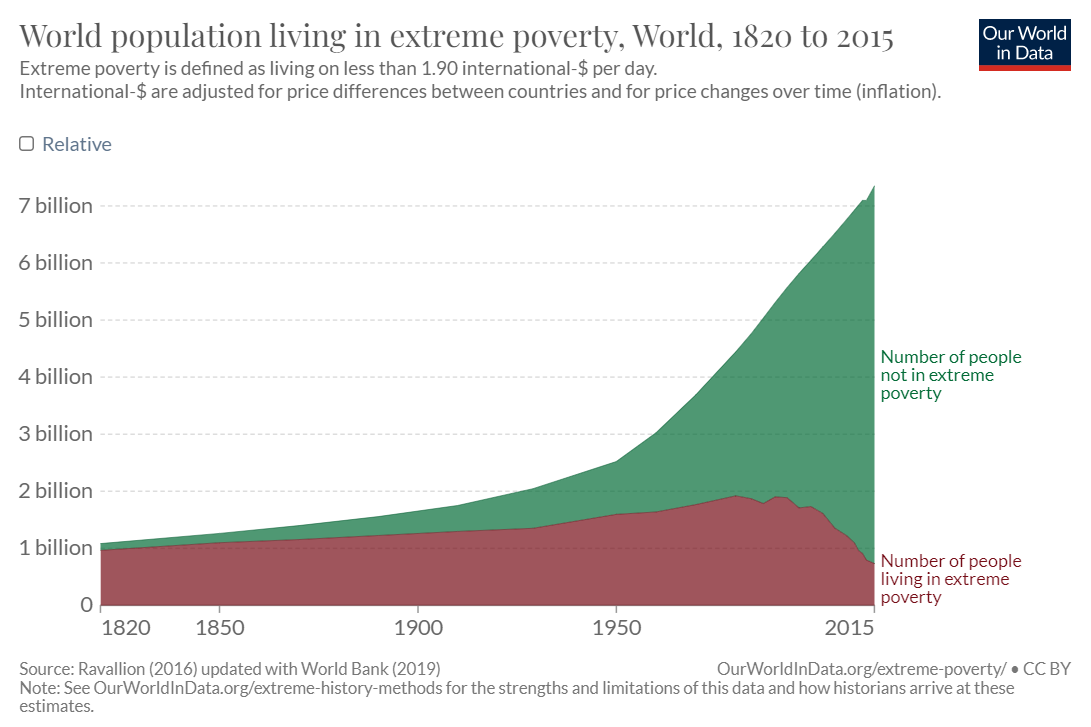
It is worth noting that we were doing pretty well before equity became the gold standard of justice. We presently stand as recipients of 200 years of Western civilisation’s monumental progress. Liberal democratic societies have advanced humanity in ways unparalleled at any other time in history. Since the early 1800s citizens of the West (and in more recent times the whole world) have been enjoying the pursuit of economic, scientific, and technological goals at unprecedented levels2. The purpose, satisfaction and wealth creation found in these pursuits has benefited an ever increasing proportion of the population. Yet despite our progress, we are constantly told how unjust and broken society is.
Many who live in areas that we now describe as poor, enjoy living standards that would have been unthinkably high 70 years ago. Most people were considered fortunate to have one change of clothes in the 19th Century. Today our charity goes to children who wear labels like Under Armour, Nike, and Adidas3. 150 years ago those who lived in poverty endured backbreaking jobs, while the wealthiest lived lives of leisure. Today the highest quintile of wage earners are working longer hours than they were 40 years ago, while the poorest quintile are working less4. Meanwhile, some poor don’t work at all and are paid for it in the form of government benefits. Perhaps most telling of all historical comparisons is that impoverished people in 1900 were malnourished and lean, today obesity is rife among our poorest citizens. If society is more inequitable now—as we are often told it is—it has become so at the same time as life outcomes have improved for almost all groups. Inequity may be increasing but this has not stopped living standards improving rapidly. This is all evidence that—as Boris found out—equity simply is not a dimension of human well-being.
Yet there is a small group who stand to benefit from the equity movement. These benefactors are those who are already well off but who want to show off their virtue by showing solidarity with those less fortunate. Rob Henderson5 coined the phrase luxury beliefs6 to describe ideals that the rich advocate in order to signal their high moral status to the world around them. Today it is possible to show off how virtuous you are simply by expounding on the value of equity, even when this virtue signalling adds nothing to anyone else’s life. Thomas Sowell captured some of the essence of the way the rich embrace luxury beliefs when he said, “ Virtually no idea is too ridiculous to be accepted, even by very intelligent and highly educated people, if it provides a way for them to feel special and important.” These words provide a very clear insight for why there is a constant droning on about equity. Making equity claims allows one to appear compassionate without having to incur a real personal cost. Yet while academics, politicians, bureaucrats and anyone else who wants to look important can receive a pat on the back for playing the equity card, it will remain as a cheap form of solidarity with the less well off, and an easy way to appear noble.
Equity as a societal goal makes little sense in the ever expanding modern world. It is unattainable, unnecessary, and serves only to build the image of a small section of society who are already rich and want to add a virtuous reputation to the abundance they already have.
Dispensing with equity goals does not mean that people need not love and care for those in their communities, or that wealthier people and groups shouldn’t support people who have less. Genuine charity and compassion remain as vital needs. Obviously there are individuals in our society who are poor and need real expressions of kindness, friendship, and mentorship that will make a difference to their personal situations. However, the grand vision of equity offers no such practical intervention. Equity is part of a dysfunctional ideology that must be rejected.
Image: Cato Institute
Pinker, S. (2018). Enlightenment Now. Viking.
World Bank (2019)
In 2020, when I was a principal of a school in a lower socio-economic area of Auckland, a parent came to the school office and asked a staff member for a pair of new school shoes. We could provide new shoes to students because we received them from KidsCan—a charity—who also supply jackets to many schools across New Zealand. On this occasion the staff member politely explained that the school was waiting for the next delivery of shoes and that this was expected in three weeks time. The parent turned to his son who was standing next to him, nodded and said with some urgency, “He really needs a new pair of shoes NOW because he is wearing his Nikes to school everyday and they are getting scuffed up.” The fact was that our school was acting as an intermediary for the giving of shoes and clothing to families who had the means to buy labelled clothing and, in some cases, drive $50,000 cars. Of course there were families in the school community for which this support made a huge difference and needed the service, but many did not.
Kuhn, P., Lozano, F. (2005). The expanding workweek? Understanding trends in long work hours among U.S. Men, 1979-2004. National Bureau of Economic Research. http://www.nber.org/papers/w11895

https://nypost.com/2019/08/17/luxury-beliefs-are-the-latest-status-symbol-for-rich-americans/